
The Role of Armed Security Guards in High-Risk Industries
Not every security situation calls for the same level of response. A unarmed guard at a corporate lobby handles a very different environment than a trained armed professional protecting a cash transport operation or standing post at a high-value asset facility. In certain industries, the nature of what is being protected, the people involved, and the realistic threat level all point clearly toward the need for armed security guards. Understanding which industries those are, what armed guards actually do in those environments, and why their presence makes such a measurable difference is useful knowledge for any business owner, event organizer, or property manager who is serious about physical security.
San Francisco and the broader Bay Area are home to a wide range of industries that carry elevated security risk. From financial institutions and cannabis operations to high-profile tech companies and large public events, the city has no shortage of environments where the stakes are high and the cost of a security failure is significant. This blog covers the role that armed security guards play across these high-risk industries, what their training and responsibilities actually look like, and how businesses can think clearly about when armed coverage is the right call versus when professional unarmed security officers are better suited to the situation.

Which Industries Rely Most on Armed Security Guards
Armed guards are not appropriate for every setting, but there are specific industries where their presence is not just reasonable but genuinely necessary. In these environments, the threat profile is elevated enough that the deterrent value of a visible armed professional makes a direct difference in how safe the location is and how potential threats assess the risk of targeting it.
Financial institutions are among the most consistent employers of armed security guard services. Banks, credit unions, currency exchanges, and armored transport operations all handle large amounts of cash and financial assets on a daily basis. The combination of high-value targets and public access makes these locations attractive to robbery and theft. Armed guards San Francisco working in financial environments are trained specifically for these settings, understanding how to manage the customer-facing aspects of the role while maintaining a level of readiness appropriate to the threat. Their presence alone significantly reduces the likelihood that a location will be targeted, because the risk-reward calculation for a would-be robber changes completely when an armed professional is on site.
The cannabis industry in California operates in a heavily cash-dependent environment due to federal banking restrictions, which makes dispensaries and cannabis distribution operations high-value targets. Many cannabis businesses across the Bay Area rely on armed security guard services for high-risk locations specifically because the combination of cash on premises and publicly known product inventory creates a persistent theft risk. Armed professionals in these settings manage access control, monitor surveillance systems, coordinate with alarm systems, and serve as an immediate deterrent and response capability if a situation develops.
Jewelry stores and high-end retail operations face a different but equally serious threat. Organized smash-and-grab incidents have become a well-documented problem in San Francisco, and luxury retailers have been targeted repeatedly in recent years.
Armed guards in jewelry and high-end retail environments are part of a layered security approach that also includes advanced surveillance and monitoring systems, commercial surveillance system installation designed specifically for the retail layout, and retail loss prevention security protocols that govern how staff respond to suspicious behavior. The armed component of that plan provides a response capability that camera systems and unarmed retail store security guards alone cannot offer.
Healthcare facilities, particularly hospital emergency departments and psychiatric units, represent another environment where armed security is sometimes deployed. While many healthcare settings are better served by de-escalation-trained unarmed personnel, certain units that deal with violent patients or that are located in areas with high incident rates benefit from having armed guards available as a backup resource when situations escalate beyond what unarmed staff can safely manage.
Here is a guide-style breakdown of the industries in San Francisco and the Bay Area that most commonly rely on armed security guard services:
- Banks, credit unions, and financial service operations where cash handling and public access create a consistent robbery risk.
- Cannabis dispensaries and distribution facilities where cash-heavy operations and high-value product inventories make the location a target.
- Jewelry stores, luxury retail, and high-end product showrooms where organized retail crime and smash-and-grab incidents are an ongoing threat.
- Private security details for executives, celebrities, public figures, and high-net-worth individuals who face personal safety risks in public or business settings.
- Large-scale events where a credible threat has been identified or where the profile of attendees and the nature of the event justifies a stronger deterrent presence.
- Construction sites and industrial facilities where expensive equipment and after-hours vulnerability make armed coverage a practical choice.
- Government facilities and secure data centers where access control requirements and the sensitivity of what is being protected demand the highest level of physical security.
What Armed Guards Actually Do in High-Risk Environments
There is a common misconception that the role of an armed security guard is simply to be ready to use their firearm if something goes wrong. In practice, armed professionals spend the vast majority of their time doing exactly what unarmed guards do: managing access, conducting patrols, monitoring camera systems, communicating with their team, and working to prevent incidents before they develop. The difference is that they carry additional training, additional authority, and an additional tool that changes how potential threats perceive the environment they are protecting.
Armed guards working in high-risk industries go through more extensive training than their unarmed counterparts. In California, armed security guards are required to complete state-mandated firearms training and ongoing qualification to maintain their armed guard certification. Beyond that legal requirement, professional security companies invest in additional training that covers use-of-force law, tactical decision-making, de-escalation techniques, and how to manage situations where a firearm may need to be drawn without being discharged. This training is designed to produce professionals who have both the capability and the judgment to handle high-stakes situations appropriately.
Risk assessment and operational security planning is a standard part of deploying armed guards in any environment. Before an armed professional begins working a location or an event, the security company conducts an evaluation of the specific threats present, the layout of the space, the protocols for different types of incidents, and the communication chain between the guard, their supervisor, and local law enforcement. This planning phase is what transforms a capable individual into an effective part of a coordinated security operation rather than just someone standing at a post with a weapon.
For events that require armed coverage, the planning process involves close coordination between the armed security team, the event organizers, the venue, and in some cases local law enforcement. High-end event security management that includes armed components requires a higher level of operational detail than standard event security. Guard positions, patrol routes, communication protocols, escalation procedures, and extraction plans for VIP guests all need to be worked out in advance. Security operations for large corporate events or high-profile public gatherings where armed guards are part of the team demand this level of preparation to function effectively.
Armed and Unarmed Guards Working Together
In many high-risk environments, the most effective security plan combines armed and unarmed personnel rather than relying exclusively on one or the other. This approach allows the security team to put the right level of coverage in the right places without creating an environment that feels militarized or unwelcoming in areas where that tone would be counterproductive.
A practical example of this in a San Francisco context might be a large tech company event where the majority of security coverage is handled by professional unarmed security officers who manage guest check-in, monitor the interior of the venue, and work with event staff to keep the evening running smoothly. Armed guards are positioned at the building perimeter, at parking structure access points, and as part of a dedicated executive protection detail for the senior leadership attending the event.
The unarmed guards create a professional, welcoming security presence for guests while the armed component handles the areas and individuals that carry the highest risk. This layered approach is standard practice among experienced security providers and consistently produces better outcomes than a single-tier solution.
Combining armed and unarmed guard services also allows businesses and event organizers to manage security costs more effectively. Armed guards are more expensive due to their additional training and licensing requirements, so placing them strategically at the highest-risk points while using professional unarmed security officers for broader coverage delivers a stronger overall security posture than either option alone at the same total cost.
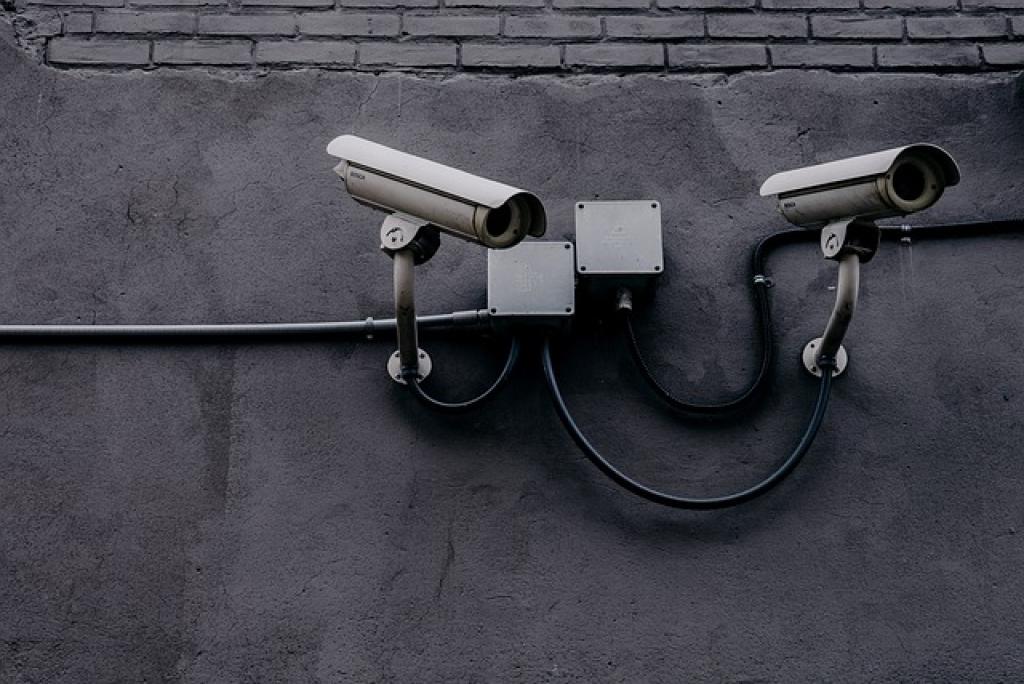
Technology plays an important supporting role in environments where armed guards are deployed. Real-time surveillance monitoring solutions, alarm and camera system installation, and business alarm system installation all extend the effectiveness of the security team by providing live visibility across the entire property. When an armed guard is monitoring camera feeds from a central station and has the ability to respond immediately to what they see, they function as both a monitoring resource and a rapid response capability. That combination is what enterprise-level physical security solutions look like in practice.
For businesses in San Francisco that operate in high-risk industries or that are planning events requiring elevated security coverage, working with a Bay Area security company that has real experience deploying armed professionals in complex environments makes a meaningful difference. Jeff Gutierrez Event Security Guard provides armed and unarmed guard services for high-risk environments across the Bay Area, working with clients to build security plans that match the actual threat profile of their location or event.
The goal is always coverage that is strong where it needs to be, proportionate to the real risk, and managed by professionals who have the training and judgment to handle whatever develops. Jeff Gutierrez Event Security Guard brings that combination of experience and operational discipline to every deployment, whether it is a single armed guard at a private event or a full security team covering a complex high-risk environment around the clock.