Smart Security for Large Properties
Securing a small office or a single retail storefront is one thing. Securing a large property is a different challenge entirely. When you are managing a sprawling commercial campus, a multi-building industrial complex, a large event venue, or a mixed-use development with hundreds of people moving through it every day, the security variables multiply fast. You have more entry points to monitor, more square footage to cover, more people to manage, and more ways for things to go wrong without anyone noticing until it is too late. The security approach that works for a small business simply does not scale to a large property without significant rethinking.
What separates properties that handle this well from those that do not is rarely budget. It is strategy. Large properties that maintain strong physical security do so because they have built a plan that uses the right combination of technology, trained personnel, and operational structure to cover their specific environment. This guide breaks down exactly how that works, what smart security for large properties actually looks like in practice, and what property owners and managers in San Francisco and the Bay Area should be thinking about when they evaluate their current setup.
Why Large Properties Need a Different Security Approach
The scale of a large property changes almost every aspect of how security needs to function. A single guard at one entrance might be enough for a small office. A large commercial campus with six buildings, multiple parking structures, loading docks, and hundreds of daily visitors needs something fundamentally different. The coverage gaps that would be minor inconveniences on a small property become serious vulnerabilities when the property is large enough that an incident in one area can go completely unnoticed by personnel stationed elsewhere.
Perimeter management is one of the first challenges that sets large properties apart. The longer and more complex a perimeter is, the harder it is to monitor consistently with stationary personnel alone. Fencing, gates, access roads, and boundary areas all need to be part of a coverage plan that accounts for every point where an unauthorized person could enter the property. Properties that rely on a single guard post at the main entrance while leaving secondary gates, side roads, and perimeter fencing unwatched are operating with significant blind spots that anyone paying attention would quickly identify.
Interior zones add another layer of complexity. Large properties often contain areas with very different security requirements sitting next to each other. A corporate campus might have open common areas, secured office wings, server rooms with restricted access, parking garages, and outdoor spaces all within the same footprint. A large event venue might have a public-facing front of house, a backstage area for performers and staff, a VIP section with separate access, and loading areas that are active throughout the event. Each zone has its own risk profile and its own coverage requirements, and a smart security plan addresses them individually rather than treating the whole property as a single uniform environment.
Response time across large properties is a challenge that many security plans underestimate. If an incident occurs at the far end of a large campus and the nearest guard is a five-minute walk away, that response time gap matters. A well-designed security plan for a large property accounts for this by positioning personnel strategically, using mobile patrol to maintain presence across the full footprint, and layering technology like camera systems and alarm systems to detect incidents quickly and direct the nearest available guard to respond.
Here is a guide-style breakdown of the key factors that make large property security different from small property security:
- Multiple entry and exit points that all require active monitoring rather than a single controlled access point that one guard can manage alone.
- Interior zones with different access requirements that need individual coverage plans rather than a blanket approach applied across the whole property.
- Longer response distances that require strategic personnel placement and mobile patrol to maintain acceptable response times across the full property.
- Higher foot traffic volumes that make it harder to distinguish between authorized visitors and people who should not be on the property.
- More complex communication requirements between security personnel, property management, and emergency services when something develops across a large footprint.
- Greater investment in physical assets and infrastructure that raises the cost of any security failure significantly.
How Technology and Personnel Work Together on Large Properties
The most effective security setups for large properties do not choose between technology and trained personnel. They use both in a way that compensates for the limitations of each. Technology extends coverage to areas where it is not practical to station a guard at all times. Personnel provide the judgment, mobility, and response capability that technology alone cannot deliver. When these two elements are designed to work together from the start, the result is a security operation that covers far more ground than either could manage independently.
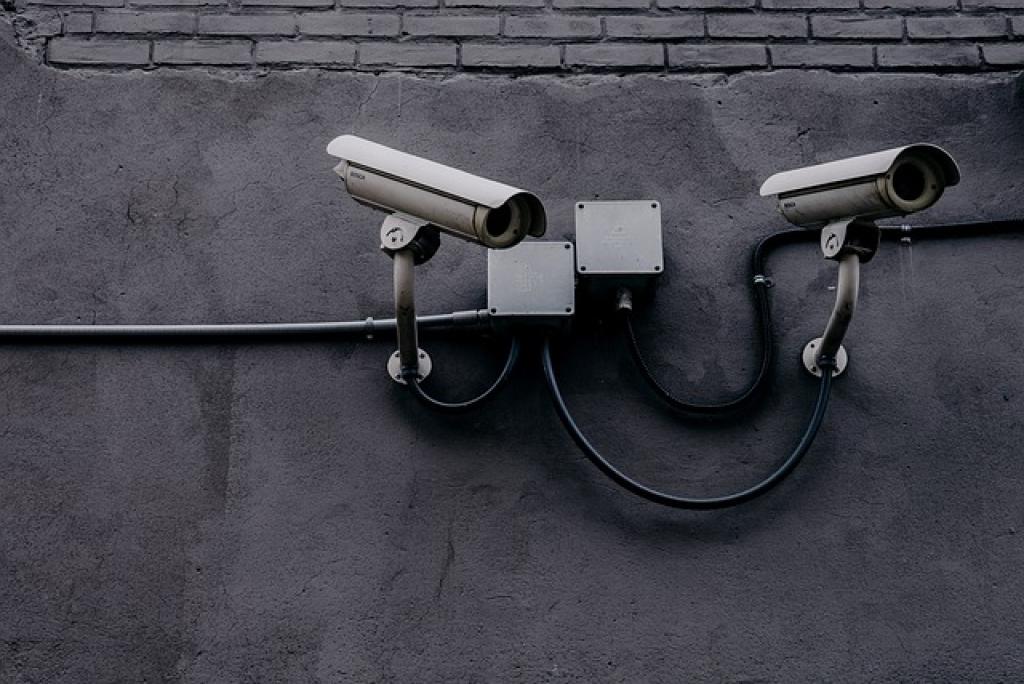
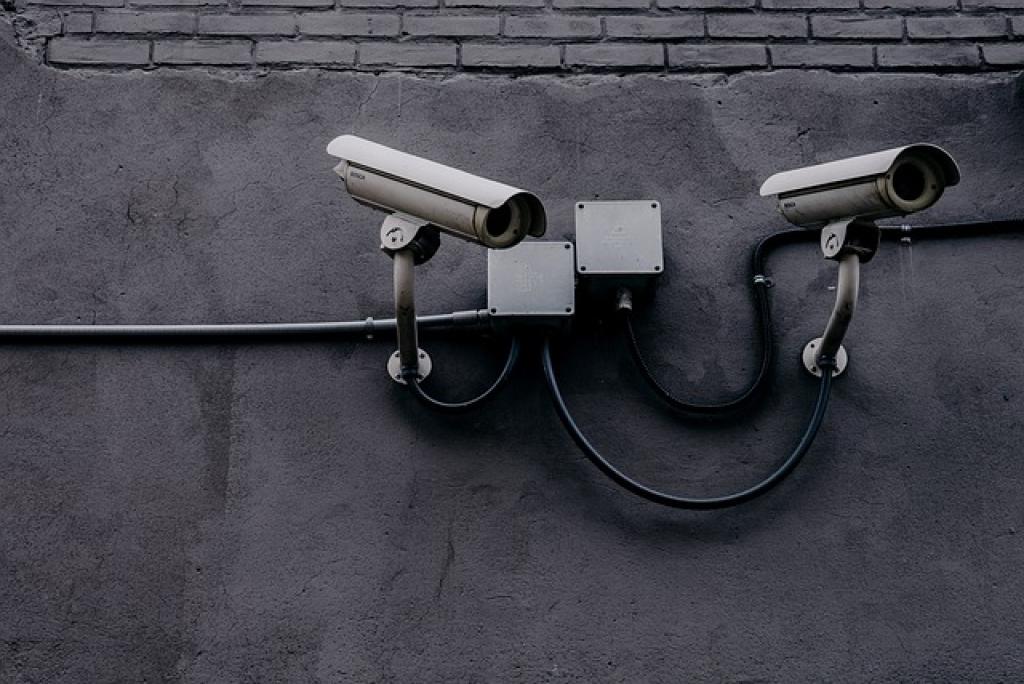
Camera systems are the backbone of technology-based coverage on large properties. A commercial surveillance system installation designed for a large property covers perimeter areas, parking structures, building entrances, lobbies, loading docks, and any interior zone that requires monitoring. The cameras themselves are only part of the solution. Advanced surveillance and monitoring systems that allow a security lead to view all feeds from a central monitoring station, receive motion-triggered alerts, and communicate immediately with personnel in the field transform a passive recording system into an active security tool. Real-time surveillance monitoring solutions mean that an incident identified on a camera feed can trigger a guard response within seconds rather than being discovered hours later during a footage review.
Alarm systems on large properties serve multiple functions simultaneously. They detect unauthorized access at specific points, trigger alerts that can be routed to an onsite security team or an external monitoring center, and create a documented record of every activation. Business alarm system installation on a large property needs to cover all access points across the full perimeter and all restricted interior zones, not just the main building entrance. Properties that install alarms at primary doors but leave secondary access points uncovered are creating exactly the kind of gap that experienced bad actors look for.
Mobile patrol is one of the most practical human security tools for large properties. Rather than stationing guards at fixed posts throughout a campus and leaving everything between those posts unmonitored, mobile patrol officers move through the property on regular routes, maintaining a visible presence across the full footprint, checking access points and perimeter areas, and logging their observations at each stop. Security compliance logs and reporting services from mobile patrol deployments give property managers a documented record of what was checked, when, and what was found, which is valuable both for ongoing management and for liability documentation.
For properties with specific high-risk areas, onsite security guard services at fixed posts combine with mobile patrol to create layered coverage. A server room, a cash handling area, or a VIP access zone might have a dedicated guard stationed there permanently while mobile officers cover the broader property. Armed security guards San Francisco are deployed at the fixed posts where the risk level justifies a stronger deterrent, while professional unarmed security officers handle mobile patrol and general access management across lower-risk areas of the property. This combination allows the security plan to put the right level of protection where it is actually needed without applying the same approach uniformly across areas with very different risk profiles.
A practical guide to integrating technology and personnel on a large property:
- Design your camera system coverage before placing personnel so you know which areas technology can handle and which require a human presence to manage effectively.
- Position a security lead at a central monitoring station with live access to all camera feeds and direct radio communication with all personnel in the field.
- Use alarm system alerts to trigger immediate camera review and personnel dispatch rather than routing alerts only to an offsite monitoring center with no onsite response capability.
- Build mobile patrol routes that cover every area of the property at regular intervals, with enough variation in timing that the patrol schedule is not predictable to anyone watching from outside.
- Assign fixed post personnel to the specific zones that carry the highest risk and supplement with mobile coverage for everything else.
- Test the communication chain between your monitoring station, your field personnel, and local emergency services regularly so that everyone knows exactly how information flows when something happens.
Building a Long-Term Security Plan for a Large Property
Smart security for large properties is not a one-time setup. It is an ongoing operational commitment that needs to be reviewed, tested, and updated as the property evolves, as the surrounding environment changes, and as new threats or vulnerabilities emerge. The properties that maintain strong security over time are the ones that treat their security plan as a living document rather than something that gets filed away after the initial deployment.
Physical security planning and audits should be conducted on a regular schedule, not just when something goes wrong. A formal audit looks at every component of the current security setup, evaluates how well it is performing against the actual risk profile of the property, identifies gaps that have developed since the last review, and recommends specific changes. For large commercial properties, enterprise-level physical security solutions include this kind of ongoing audit as part of the service relationship rather than as an add-on that only happens after an incident makes the gaps obvious.
Risk mitigation and threat assessment services give property managers a clear picture of what has changed in their security environment over time. Neighborhoods shift. Neighboring businesses change. New construction nearby opens up sight lines or creates new access routes to the property. Staff turnover changes the security culture inside the building. All of these factors affect how well an existing security plan performs, and a professional security company that stays engaged with the property over time can identify those changes and adjust the plan accordingly before they become vulnerabilities.
Documentation is a long-term asset that many large property managers undervalue until they need it. Security compliance logs and reporting services create a continuous record of security activity across the property, including patrol logs, incident reports, alarm activations, camera footage retention, and guard activity summaries. That documentation supports insurance claims, protects against liability exposure, and provides the data needed to evaluate whether specific security investments are actually delivering results. A Bay Area security company that provides detailed reporting as part of their standard service gives property managers the visibility they need to make informed decisions about their security operation over time.
Large properties across San Francisco have unique security demands that require experienced, thoughtful planning to address properly. Jeff Gutierrez Event Security Guard works with property managers, corporate clients, and event venues throughout the Bay Area to build security operations that are designed specifically for large and complex environments.
The combination of armed and unarmed guard services, technology integration, mobile patrol, and professional surveillance camera installation that goes into a well-designed large property security plan looks different from what works for smaller environments, and getting those details right from the start is what determines how well the property stays protected over time. Jeff Gutierrez Event Security Guard brings that level of planning and operational experience to every large property engagement, because a property of that scale deserves a security plan built to match it.