
Security Measures Recommended Warehouses
Warehouses hold a lot of value. Inventory, equipment, vehicles, raw materials, finished goods ready for shipment, and sometimes sensitive data tied to logistics operations all sit inside these buildings, often with far less security protection than the value of the contents warrants. Warehouse theft is a multi-billion dollar problem in the United States, and the Bay Area is not exempt from it. Cargo theft, employee pilferage, after-hours break-ins, and organized retail crime operations that use warehouses as secondary targets all represent real risks for facility managers and business owners who are not approaching security with a clear and deliberate plan.
What makes warehouse security particularly challenging is the combination of large physical footprints, high-value contents, complex access patterns involving vendors, delivery drivers, contractors, and employees, and extended periods when the facility operates with minimal staff or none at all. These factors create a security environment that is more demanding than a typical retail store or office building, and that responds best to a layered approach that combines physical barriers, technology, and professional security personnel in a coordinated way. This blog covers the specific security measures that warehouse operators should have in place, why each one matters, and how to think about building a plan that actually fits the realities of a warehouse environment.
Physical Security Foundations Every Warehouse Needs
Before cameras, alarms, or guards can do their jobs effectively, the physical structure of a warehouse needs to provide a solid foundation. Physical security at the most basic level is about controlling who can access the facility, where they can go once inside, and how difficult it is for someone to enter or exit without authorization. Warehouses that get this foundation right make every other layer of their security plan more effective. Warehouses that skip it end up spending money on technology and personnel to compensate for structural vulnerabilities that should have been addressed first.
Perimeter control is where physical security starts. The property boundary around a warehouse should be defined clearly with fencing that is difficult to cut through or climb over. Access points in the perimeter, including vehicle gates and pedestrian entries, should be controlled and limited to the minimum number needed for operations. Every gate that exists is a point that needs to be monitored and managed.
Gates that are left propped open during receiving hours and then forgotten about create access opportunities that can be exploited hours later when the facility is empty. Physical security planning and audits for warehouse facilities consistently find that perimeter access control is one of the most common and most costly weaknesses in otherwise reasonable security setups.
Lighting throughout the property is a physical deterrent that many warehouse operators underinvest in. Large parking areas, loading dock aprons, the sides and rear of the building, and any area where vehicles or equipment are stored outside all need consistent, high-quality lighting that eliminates the dark areas where unauthorized activity can occur unobserved. Motion-activated lighting in areas that are not continuously occupied adds an active deterrent element that makes approaching the building after hours a more conspicuous act. The combination of perimeter fencing, controlled access points, and comprehensive exterior lighting changes how a warehouse presents itself to anyone considering it as a target.
Internal zoning is another physical security measure that larger and more complex warehouse operations need to address. Not every employee or visitor should have access to every area of the facility. High-value inventory storage, server rooms that contain logistics data, fleet parking areas, and office spaces adjacent to the warehouse floor all represent zones that benefit from restricted access separate from the general facility entry. Access control systems that use key cards or PIN codes for internal zone entry create a documented record of who accessed each area and when, which is valuable for both security management and for investigating incidents after they occur.
Here is a guide-style checklist of the physical security foundations a warehouse should have in place:
- Perimeter fencing around the full property boundary with a limited and actively managed number of vehicle and pedestrian access points.
- Controlled entry gates with locking mechanisms that are secured when the facility is not actively receiving vehicles or personnel.
- Comprehensive exterior lighting covering all faces of the building, parking areas, loading dock aprons, and any outdoor storage areas.
- Internal zone access controls for high-value storage areas, office spaces, and any area that should be restricted to specific personnel only.
- Reinforced entry doors on all building access points, including secondary and emergency exits, with hardware that resists forced entry.
- Clear signage indicating that the facility is monitored by camera systems and alarm systems, which serves a deterrence function independent of the technology itself.
Technology Systems That Work Hardest in Warehouse Environments
Warehouses present specific challenges for security technology. The large interior spaces, the movement of forklifts and pallet jacks, the frequent comings and goings of delivery vehicles and vendor personnel, and the long periods of after-hours inactivity all need to be accounted for in how technology systems are designed and deployed. Technology that works well in a small retail store may need significant adaptation to be effective in a warehouse environment, which is why commercial surveillance system installation for warehouses should always be designed specifically for the facility rather than using a generic configuration.
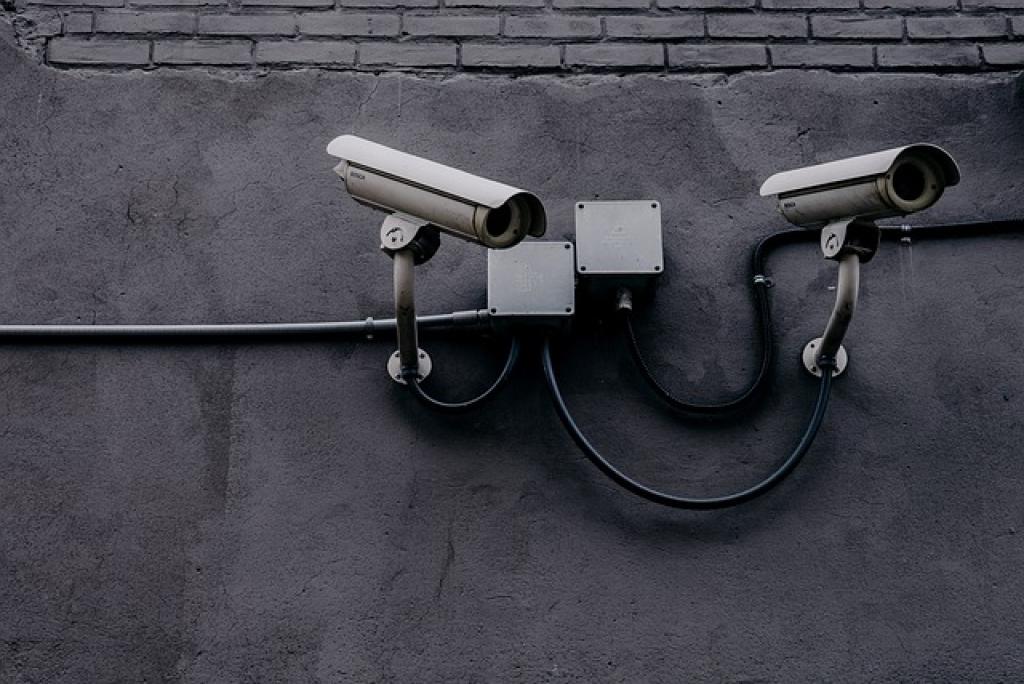
Camera systems for warehouses need to cover a wider range of environments than most commercial settings. The exterior perimeter, all vehicle entry and exit points, loading docks, the warehouse floor, storage rack areas, high-value inventory zones, office access points, and parking areas all require camera coverage. The sheer number of cameras a well-protected warehouse requires often surprises facility managers who are used to smaller commercial environments. Advanced surveillance and monitoring systems designed for warehouse applications use higher-resolution cameras with wide-angle coverage to manage the cost of covering large spaces while maintaining the image quality needed to identify individuals and read vehicle license plates clearly.
Real-time surveillance monitoring solutions make a significant difference in how useful camera coverage actually is during an active incident. A warehouse with forty cameras recording continuously but no one watching the feeds in real time will document theft and break-ins thoroughly but will not prevent them. A warehouse where those feeds are actively monitored, either by an onsite security team or through a remote monitoring service connected to emergency security guard dispatch, converts the camera system from a documentation tool into a prevention and response tool. When something is detected on a live feed, a response can be initiated within seconds rather than after the incident is already complete and the perpetrators have left the property.
Alarm systems for warehouses need to cover more than just the main entry doors. Motion sensors inside the facility that activate when the building should be empty, glass break detectors on windows and skylights, door and gate sensors on all perimeter access points, and temperature or environmental sensors for facilities storing temperature-sensitive inventory all contribute to a complete alarm picture.
Business alarm system installation that is designed around the specific layout and operational patterns of a warehouse catches the access attempts and incidents that a basic perimeter alarm would miss entirely. Alarm and camera system installation for businesses in warehouse settings should be planned together so that alarm triggers automatically display the relevant camera feed to whoever is monitoring the system.
Guard Services and Human Coverage for Warehouse Security
Technology handles detection and documentation. Trained security personnel handle prevention, response, and the judgment calls that no camera or alarm can make on its own. For warehouses with significant inventory value, high after-hours risk, or complex access management needs, professional security guard services are not a luxury. They are the part of the security plan that closes the gaps technology leaves open.
Onsite security guard services for warehouses typically involve a combination of fixed post coverage at the main entry point and mobile patrol throughout the facility and perimeter. The guard stationed at the main gate manages access control during operating hours, verifying the identity and authorization of every person and vehicle entering the facility, maintaining a visitor and vendor log, and ensuring that outbound shipments are authorized before they leave the property. This kind of structured access management is one of the most effective tools against both external theft and internal theft by employees or contractors who exploit loose entry and exit procedures.
Mobile patrol inside and around the warehouse building addresses the coverage gaps that fixed posts cannot reach. A guard conducting regular interior patrols checks that high-value storage areas are secured, looks for signs of unauthorized access or tampering, and maintains a visible presence throughout the facility that deters opportunistic theft during operating hours. Exterior patrols cover the perimeter fencing, check that vehicle gates are properly secured, and monitor the parking and loading areas where equipment and vehicles are most vulnerable during off shifts.
Security compliance logs and reporting services from these patrols create a timestamped record of when each area was checked and what was observed, providing the documentation that supports insurance claims and that helps identify patterns in how incidents develop.
For warehouses with very high-value contents or that have experienced targeted theft, armed security guards San Francisco provide a stronger deterrent at key access points and during high-risk periods. Armed security guard services for high-risk locations are appropriate when the threat profile of the facility justifies the additional level of protection, particularly for after-hours coverage when the facility is empty and the only thing standing between the inventory and a determined theft attempt is the security team on site. The combination of armed and unarmed guard services, with armed personnel at the perimeter and unarmed professionals managing interior access and patrol, is a common and effective approach for larger warehouse operations.
24-hour security services for warehouses are the standard recommendation for facilities that store high-value inventory, that have previously experienced after-hours incidents, or that are located in areas with higher rates of commercial property crime. The hours between closing and opening are when warehouses are most vulnerable, and continuous professional coverage during that window closes the gap that overnight camera recording alone cannot fill.
A Bay Area security company that understands warehouse environments will always recommend evaluating 24-hour coverage against the value of what is being protected, because the cost of a single significant theft or break-in almost always exceeds the cost of sustained professional security coverage.
Customized physical security planning for businesses in warehouse settings starts with a thorough risk assessment of the specific facility, its contents, its operational patterns, and its physical environment. Jeff Gutierrez Event Security Guard works with warehouse operators and commercial property managers across San Francisco and the Bay Area to build security plans that address the real vulnerabilities of each facility rather than applying a generic approach.
Risk mitigation and threat assessment services tailored to warehouse environments identify where the current setup has gaps and what specific measures would close them most effectively. The goal is always a security operation that protects what is inside the building, manages who comes and goes, and responds quickly when something does not go according to plan.