
Business Security Threat Response
Something happens at your business. Maybe an alarm goes off. Maybe a staff member calls in a suspicious person. Maybe a fight breaks out near the entrance. What happens in the next sixty seconds matters more than most business owners ever think about until they are standing in the middle of it. Threat response is not just a security industry term. It is the difference between an incident that gets contained quickly and one that spins out of control, costs money, hurts people, and makes headlines for the wrong reasons.
A lot of businesses in San Francisco have some version of a security setup. Cameras in the corner. An alarm on the door. Maybe a guard who checks badges in the morning. But having security tools is not the same as having a threat response system. A system means everything works together. The camera feeds into a live monitor. The alarm triggers an immediate dispatch. The guard on the floor knows exactly what steps to follow and who to call. When all of that is connected and rehearsed, threats get handled. When it is not, people freeze, things escalate, and the damage is always worse than it needed to be.
What a Threat Actually Looks Like Before It Becomes a Crisis
Most business security threats do not start as emergencies. They start as small, easy-to-miss signals that something is off. A person who has been standing near the entrance for twenty minutes and not come inside. An employee who keeps returning to a storage area during off-hours. A vehicle that circles the parking lot at the same time every night. These are the early warning signs that a well-trained security team picks up on and acts on before the situation moves to the next level.
The problem is that most businesses are not set up to catch those signals. Their camera systems record but nobody watches the live feed. Their guards patrol on a fixed schedule that anyone observing the building can learn and work around. Their alarm systems only activate after a door has already been forced. By the time the threat is obvious, it is already past the point where early intervention could have changed the outcome.
Threat recognition starts with understanding what normal looks like at your specific property. Every business has a baseline. The usual flow of customers, the typical times deliveries arrive, the regular pattern of staff movement. When something breaks that pattern, it deserves attention. Professional security personnel are trained to notice those breaks and to assess them without jumping to conclusions or escalating unnecessarily. That balance between alertness and calm judgment is one of the most valuable things a trained guard brings to a commercial property.
Businesses that want to get ahead of threats rather than just react to them need to think about detection as a layered process. Surveillance systems give you visibility. Trained personnel give you judgment. Clear protocols give you a consistent response. None of those three things works as well without the other two. A camera system with no one watching it is just a recording device. A guard with no protocol is just someone hoping they make the right call under pressure. A protocol with no surveillance is just a document sitting in a drawer.
Early warning signs that security teams are trained to watch for:
- Individuals loitering near entry points without a clear purpose for an extended period
- Unfamiliar vehicles parked in positions that give a clear sightline to cash handling areas or storage
- Staff accessing restricted areas outside of their normal working hours without a documented reason
- Repeated low-level incidents like minor theft or vandalism that suggest someone is testing the response
- Unusual interest in security camera positions, guard schedules, or access control systems from visitors or new staff
How Response Protocols Actually Work in Practice
When a threat moves past the early warning stage and becomes an active incident, the response needs to be fast, coordinated, and calm. Panic is the enemy of good threat response. So is improvisation. The businesses that handle security incidents best are the ones where every person involved already knows their role before the incident starts. The guard knows whether to intervene or hold position. The manager knows to call the monitoring center before calling the police. The staff know to move customers away from the area without creating a bigger scene. None of that happens naturally in a stressful moment. It happens because it was planned, documented, and practiced.
A threat response protocol is a step-by-step guide for what to do when specific types of incidents occur. It covers who takes lead, who communicates with outside agencies, what the guard does while waiting for backup, how staff are notified and protected, and what gets documented immediately after the incident closes. Different types of threats need different protocols. A shoplifting situation at a retail property has a very different response than a physical altercation or a break-in in progress. Writing one generic protocol and calling it done leaves too many situations uncovered.
For retail businesses, the shoplifting and organized theft response is one of the most frequently used protocols. Retail security guards trained in loss prevention know that direct confrontation in a retail environment often creates more risk than it resolves. The protocol typically involves surveillance confirmation, radio communication with the floor guard, positioning near the exit, and engaging calmly after the individual has passed the last point of sale. That sequence protects staff, reduces the chance of violence, and still addresses the theft. It works because it is practiced and because every person involved knows their part.
For businesses that host events or have higher foot traffic at certain times, the protocols need to account for crowd dynamics. A dispute that might be easily de-escalated between two people becomes much harder to manage when it happens in the middle of a packed event. Security operations for functions held at corporate venues or event spaces require guards trained specifically in crowd behavior and de-escalation under pressure. The response to an escalating situation in a crowd is very different from the response to the same situation in an empty parking lot, and the protocol needs to reflect that difference.
For situations that involve an immediate physical threat to people on the property, the response protocol needs to involve armed security guards San Francisco businesses can reach quickly. Some incidents move too fast for unarmed intervention to be safe or effective. Having access to armed guards does not mean every situation escalates to that level. It means that when a situation genuinely requires that level of response, the capability is there and the protocol for calling it in is already clear. Emergency security guard dispatch services make this possible even for businesses that do not have armed guards posted on-site full time.
Steps that belong in any business threat response protocol:
- A clear chain of communication so every person knows who to contact first and in what order based on the type of incident
- Defined roles for security personnel, management, and staff so there is no overlap or confusion during the response
- Documentation requirements that capture what happened, when, who was involved, and what actions were taken
- A post-incident review process that identifies what worked, what did not, and what needs to change in the protocol
- Regular drills so the protocol is familiar before it is ever needed under real pressure
Technology as a Tool Inside Your Response System
Good technology does not replace good people. It makes good people faster and better informed. The camera system that feeds live footage to a security command point means the monitoring operator can tell the guard exactly where to go before the guard even reaches the area. The alarm system that triggers an instant dispatch means response time shrinks from minutes to seconds. The access control log that shows who was in a restricted area and when means investigations that used to take days can be resolved in hours. Technology creates the information that human judgment needs to act effectively.
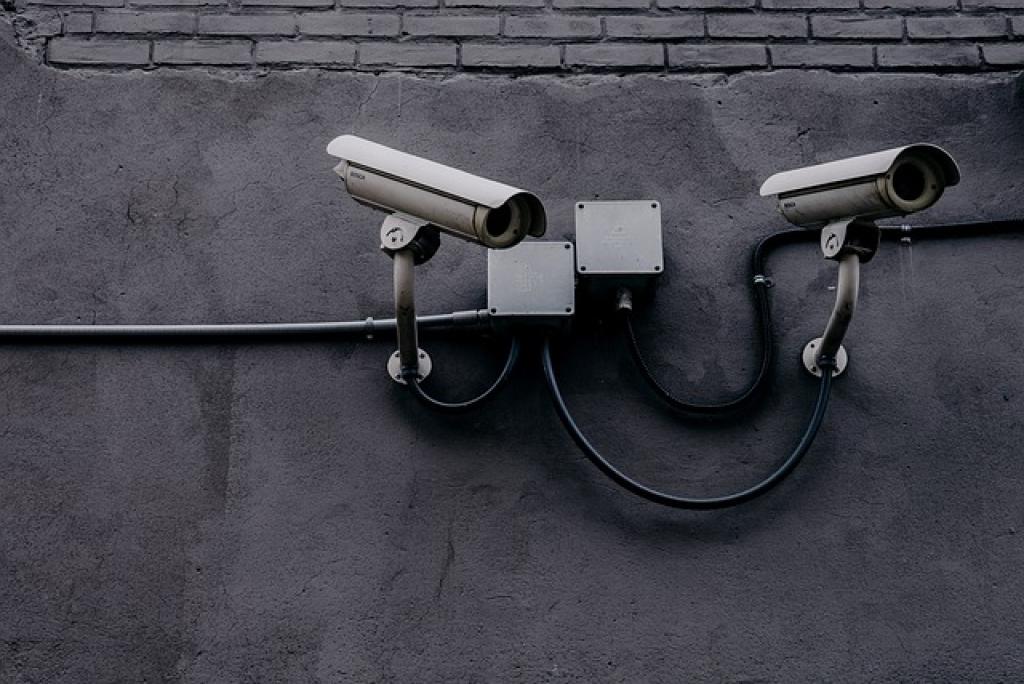
Camera systems at a commercial property should cover every entry and exit point, all high-value storage areas, parking structures, cash handling locations, and common areas where incidents are most likely to occur. The placement matters as much as the quantity. Ten cameras with overlapping blind spots do less than six cameras positioned correctly. Commercial surveillance system installation done by experienced professionals starts with a coverage map that identifies every critical area and designs camera placement to eliminate gaps rather than just maximize the number of units installed.
Real-time surveillance monitoring is what turns a recording system into a response tool. A security team watching live feeds can identify a developing situation and direct guards before it reaches the point where an alarm triggers. That proactive capability is one of the biggest differences between a basic camera setup and a true security system. Advanced surveillance and monitoring systems used by professional security teams include features like motion-triggered alerts, audio monitoring in certain environments, and remote access that allows a central monitoring center to watch multiple properties simultaneously.
Alarm systems serve as the automated trigger in the response chain. When a door is forced, a window is broken, or a motion sensor activates in a space that should be empty, the alarm fires and the response begins. Business alarm system installation that connects directly to a 24-hour monitoring center means the response does not depend on someone happening to be nearby and awake at two in the morning. The system detects, the center receives the alert, and the dispatch goes out. That chain needs to be tested regularly because an alarm system that nobody has verified in six months may not perform the way it should when it actually matters.
For businesses at higher risk levels, enterprise-level physical security solutions integrate all of these technology components into a unified platform where everything communicates. The camera sees something, the alarm confirms it, the access control log shows who is in the building, and the guard receives a notification with all of that information before taking a step. That level of integration is not only for large corporations. Businesses of all sizes in San Francisco can access scalable versions of these systems through a professional security guard company that understands how to match technology to the specific needs and budget of each client.
Building the Team and Culture Around Your Response Plan
A threat response plan lives or dies based on the people executing it. The best protocol document in the world does not help if the guards on the floor were never trained on it, if the managers do not know their role, or if the communication system breaks down under pressure. Building a response capability means building a team that understands the plan, believes in it, and can execute it under stress.
Professional unarmed security officers are the backbone of most commercial security operations. They handle the day-to-day threat recognition and early response work that keeps small situations from becoming large ones. Unarmed security San Francisco businesses deploy for retail, office, and commercial property coverage are trained in customer interaction, de-escalation, report writing, and emergency communication. They are not just a visible presence. They are an active part of the detection and response system.
For specific situations that require a higher level of response capability, businesses need access to armed guards. Hire armed security guards for positions that involve protecting high-value assets, managing access at high-risk locations, or providing executive protection and armed security for personnel with elevated threat profiles. The decision to place armed guards at a specific position should follow a documented risk assessment, not a reaction to fear or a recent incident. Placing armed security where the risk genuinely calls for it is smart security planning. Placing it everywhere out of caution is waste that can also create a tense environment for staff and customers.
Staff training is a piece of the response culture that many businesses underestimate. Security guards cannot be everywhere at once. When an incident develops in an area where a guard is not immediately present, the staff on the floor are the first responders until security arrives. Teaching staff how to recognize a developing threat, how to alert security without escalating the situation, and what to do to protect themselves and customers in the meantime is a practical investment that costs very little and can make a significant difference in outcomes.
Jeff Gutierrez Event Security Guard works with businesses across San Francisco and the Bay Area to develop response systems that combine trained personnel, practical technology, and clear protocols into something that actually functions under real conditions. From retail environments to corporate offices to event venues, the approach is always grounded in the specific risks and layout of the business rather than a template applied the same way regardless of context.
Security compliance logs and reporting services are the documentation side of threat response that businesses often overlook until they need the records for an insurance claim, a legal matter, or a staffing review. Every incident, every guard patrol, every alarm trigger, and every access control event should be logged in a format that is clear, timestamped, and retrievable. That documentation is not just administrative. It is the data that tells you whether your response system is working, where the gaps are, and what needs to change.
Threat response is not a set-it-and-forget-it part of running a business. The risks change. The business grows or moves. The neighborhood shifts. A response plan that was built two years ago may not account for the current reality of your property and your people. Regular reviews that include a fresh look at the risk profile, a test of all technology systems, a check on guard training and protocol familiarity, and an honest assessment of what has and has not worked in recent incidents keep the plan sharp and relevant.
The businesses that stay ahead of security threats are the ones that treat response planning as an ongoing part of operations rather than something that gets attention only after something goes wrong.